FIELD GUIDE · EXPLORE
The Auld Alliance in Aubigny: understanding the Franco-Scottish legacy
Aubigny's flags and pipes are not simply decoration: they point to a medieval diplomatic alliance, the lordship granted to the Stuarts and a local memory that remains actively celebrated.
ON THE MAP
Addresses and map links
Auld Alliance interpretation centre
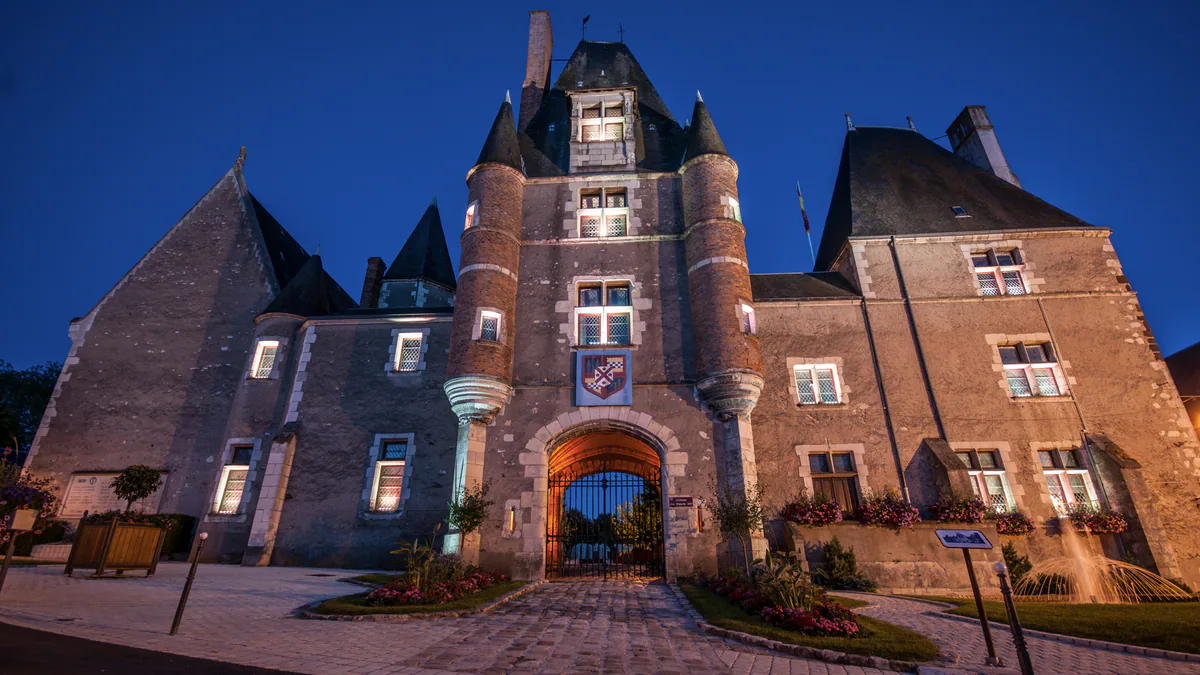
Château des Stuarts, place de la Résistance18700 Aubigny-sur-Nère
France
The rooms and activities are seasonal; check the municipal page before building your day around them.
Three dates that keep the story clear
The term Auld Alliance describes the alliance made between France and Scotland at the end of the thirteenth century. The municipality of Aubigny provides three useful landmarks: the treaty signed in 1295, Scottish soldiers’ support for the French crown during the Hundred Years’ War, and the grant of the lordship of Aubigny to John Stuart of Darnley in 1423.
Those points explain why a town in the Cher has a Château des Stuarts and such visible Scottish imagery. They also prevent a misleading reading: Aubigny was not a modern enclave or a replica Scottish village. It is a French town whose long seigneurial period was deeply shaped by a Scottish family.
What the Château des Stuarts adds
An exterior walk shows the scale of the château and its place in the centre. It does not explain the names, military alliances and transfers of the lordship. The Auld Alliance interpretation centre fills that gap with material designed for different levels of interest.
Before visiting, check opening days, final admission and available activities on the municipality’s current page. Bookable games are not the same thing as ordinary admission. Families should ask which option suits their children’s ages; hurried visitors should still allow enough time to read rather than merely moving between screens.
Read the evidence in the town
After the centre, return to the streets with better context. Look for the château, heraldic signs, street names, timber-framed houses and reminders of the Stuart presence. The fire of 1512 and subsequent rebuilding are part of this urban story. A guided visit advertised by the tourist office may explain details that the fronts alone cannot reveal.
View buildings from public space and follow access signs. A heritage plaque does not open a private house, and access to a garden does not automatically include the neighbouring building.
The Franco-Scottish festival is a different experience
Aubigny’s Franco-Scottish celebrations continue the connection through parades, music, events and encounters. They are normally organised around 14 July, but use the municipality’s page for the current festival to confirm dates, access and the programme.
Do not treat a festival day as a normal sightseeing day. Arrive earlier, identify traffic restrictions, agree on a meeting point and expect quiet study of the architecture to be harder. If history is your priority, visit outside the festival and spend time in the interpretation centre. If the contemporary celebration is the attraction, build the day around the official programme.
Make the visit meaningful
Spend time on the context first, then explore the town. That sequence prevents the Scottish legacy from being reduced to tartan and bagpipes. It distinguishes a political alliance, a local lordship, a rebuilt townscape and a modern celebration—four different layers within the same story.
Pair the centre with no more than one other substantial indoor visit. The streets and gardens are not filler between tickets; they are where the historical relationship became a physical town. Check each opening directly, save the location offline and leave room to look rather than only to arrive.