FIELD GUIDE · EXPLORE
Things to do in Sauldre and Sologne: build a day that works
Sauldre and Sologne works best as a series of coherent local days: pair one town and its heritage with one natural site, and reserve a timed activity only after confirming it.
Ten specific activities to plan
These choices sit alongside the village walks, castles and natural sites already covered in this guide. Each link opens a full guide with a meeting point, maps, questions to ask and a fallback plan. Inclusion here does not promise that an activity will operate on your date: booking, weather, ability rules, permits and the live calendar still need checking with the named source.
Get active outdoors
- Treetop courses at Aventure Parc Nançay: choose for the least-confident participant and verify admission conditions before travelling.
- Fishing in Sauldre and Sologne: separate the fishing card, water category, protected reserve and landowner access questions.
- Horse riding and local equestrian centres: describe your real experience, reserve ahead and confirm what kind of outing is actually offered.
- Electric boats and paddle activities on the canal: travel to La Marine at Argent only after confirming the seasonal operation.
- A discovery flight from Aubigny: understand the difference between travelling as a passenger and taking an instructional flight.
- Golf at Nançay or countryside golf at Aubigny: compare a conventional course with an informal activity beside the ponds.
Understand the region
- Galerie Capazza in Nançay: check the current exhibition programme before pairing contemporary art with astronomy.
- Musée des Métiers d’Antan in Argent: connect tools and skills to rural life and the canal landscape.
- Maison de la Forêt in Brinon: begin with an interpretation of Raboliot country, then select one marked walk.
Meet a producer
- Quincy wine tasting near Ivoy-le-Pré: make an appointment, establish what the visit includes and choose the driver before tasting.
Pick an area before you pick ten attractions
Sauldre and Sologne is a rural patchwork of small towns, villages, woodland, ponds and country roads. The gaps look modest on a map, yet repeated drives can consume the most useful part of a day. A better plan is to select one main area and combine two or three nearby experiences.
For a first visit, Aubigny-sur-Nère has the most compact programme: timber-framed houses, the Château des Stuarts, the story of the Auld Alliance, gardens and a walk beside the Nère. Our Aubigny itinerary puts them in a sensible order. Add an indoor visit only after checking the operator’s opening information or the tourist office’s current museum and interpretation-centre directory.
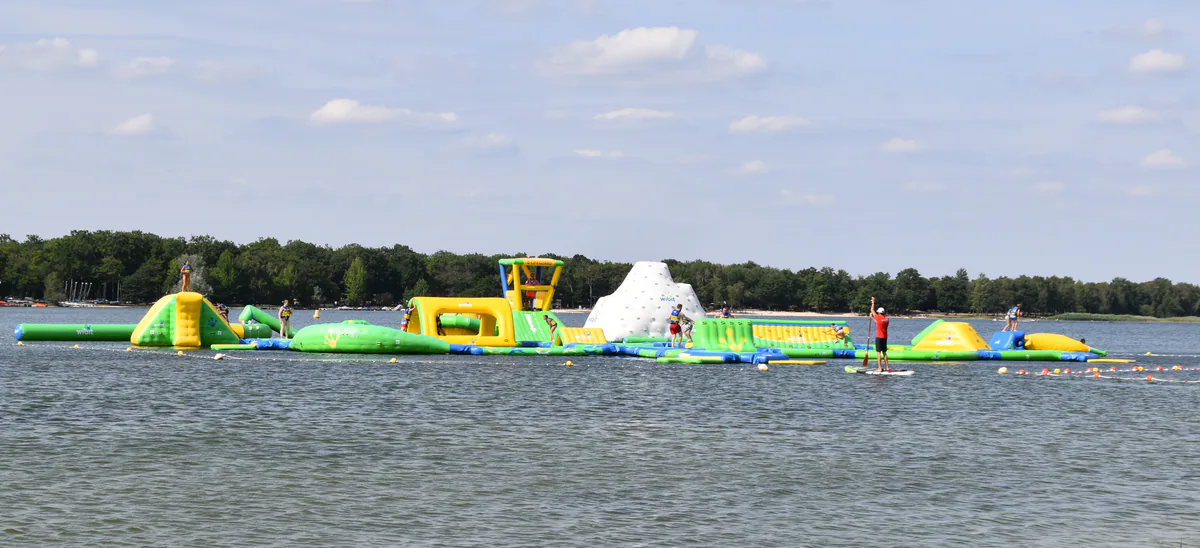
For a water-and-landscape day, keep Argent-sur-Sauldre, the canal and Étang du Puits together. The museum, park and canal provide historical context; the lake gives you open air and, in season, leisure activities whose operation depends on weather and providers. Read our Étang du Puits guide before treating swimming or water activities as a fixed part of your day.
For science and imagination, Nançay is a strong third anchor. Pôle des Étoiles publishes its sessions, programme and booking arrangements on its official website. Pair a confirmed session with the village or a short outdoor stop. Do not build the whole day around a show that you have neither checked nor booked.
Nature: see more by disturbing less
Two sensitive natural areas require different expectations. Étang du Puits is a large body of water, fringed by woodland and connected to the history of the Sauldre Canal. Tourbière des Landes, near Ménétréol-sur-Sauldre, is a fragile peatland. The current Conservatoire information says it is not freely open and directs visitors to organised nature events. Read our nature guide and dedicated Tourbière des Landes page before setting off.
For walking, choose a published itinerary instead of improvising a line through woodland. The tourist office maintains a directory of walking routes with route records and maps. Our walking guide explains how to compare distance, surface, start point and fallback options. Stay on signed, authorised ways: woodland visible from a public road is not automatically public land.
The Sauldre Canal is rewarding when treated as a slow landscape rather than an attraction to tick off. Around Blancafort and Argent-sur-Sauldre, it connects hydraulic structures, the former marl trade and village stops. Water activities may appear on specific seasonal dates, but a pleasant towpath does not guarantee a hire desk or navigation every day. Our canal guide separates a self-guided visit from time-sensitive commercial or municipal activities.
Heritage: follow a thread
A castle route can include the Château des Stuarts, La Verrerie, Blancafort and La Chapelle-d’Angillon. Their access conditions are not interchangeable: a property may be private, seasonal, guided only or partially open. Use our Sauldre and Sologne castles guide, then verify each official source on the day you travel.
Another thread follows local skills and notable people: Musée des Métiers d’Antan in Argent-sur-Sauldre, Alain-Fournier around La Chapelle-d’Angillon, astronomy at Nançay and Scottish heritage in Aubigny. That produces a clearer day than an unrelated string of façades. It also gives you an indoor reserve for wet weather.
Match the plan to the time you actually have
Half a day: explore central Aubigny with one confirmed indoor stop, or Argent with a short canal walk. One day: add a single natural site or a nearby castle. Two days: give one day to Aubigny and its surroundings, then one to Argent, the lake and canal. Three days: reserve the extra day for Nançay, a proper walk or the villages of northern Cher.
With children, alternate a place that requires listening with somewhere they can move. A long guided visit followed by another museum is rarely as robust as one museum, a picnic and a short trail. Our family activities guide offers weather-based combinations without inventing a universal minimum age; each operator sets its own requirements.
The final check that saves a wasted journey
The day before, open the tourist office’s live events calendar and the official page for every place on your shortlist. Check opening, booking, meeting point, clothing advice and weather cancellations. Download maps before mobile coverage drops, bring water and rain or sun protection, and never use an old blog post as evidence that a seasonal activity still runs.
Leave some slack in the schedule. A market conversation, a wetter path than expected or a temporary exhibition can deserve more time. A successful day here is not the one with the longest checklist; it is the one where landscape, villages and history form a journey you can actually enjoy.